

INTERPOL Operation Jackal IV Leads to 58 Arrests and Major Money Laundering Disruptions

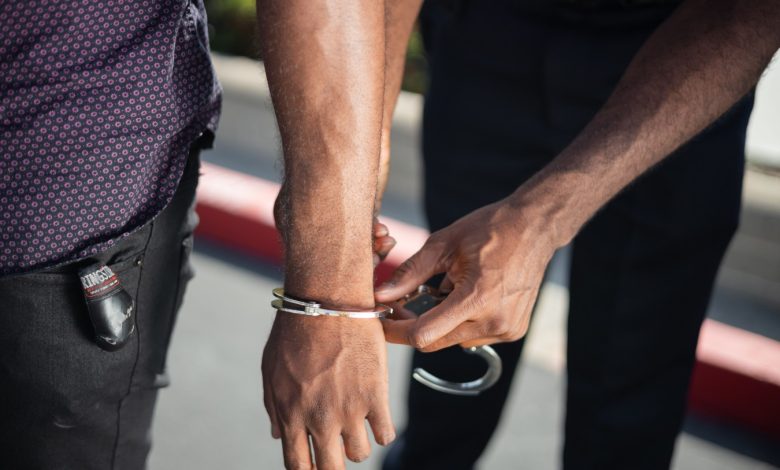
INTERPOL has reported the results of Operation Jackal IV, an eight-month international operation targeting West African organized crime groups and their money-laundering infrastructure. The operation ran from November 2025 to June 2026, involved 22 countries across six continents, and led to 58 arrests and the identification of 263 suspects.
INTERPOL said the operation was designed to disrupt money laundering, identify high-value targets, seize assets and support arrests and prosecutions linked to West African criminal networks, including Black Axe and similar groups. These networks are associated with cyber-enabled financial fraud such as romance scams, cryptocurrency and investment scams, business email compromise and other serious organized crime.
South Africa: US$2.67 million seized and 257 bank accounts blocked
In South Africa, authorities raided seven locations in Johannesburg linked to a syndicate running romance and investment scams targeting retirees in English-speaking countries. INTERPOL said the network used an organized structure in which members acted as “conversion” or “retention” agents at different stages of the fraud.
South African authorities, supported by an INTERPOL Operational Support Team, seized US$2.67 million, blocked 257 bank accounts and arrested 39 people.
Argentina, Italy and Romania reveal different laundering models
In Argentina, authorities identified 196 individuals suspected of participating in a Crime-as-a-Service network that allegedly supplied website domains and money-laundering support to West African organized crime groups. The investigation resulted in 17 arrests.
In Italy, investigators identified an individual linked to a pan-European money-laundering network that allegedly used shell companies, remittance services and cash withdrawals to conceal the origin of funds. INTERPOL said a single account laundered €845,000 across 560 transactions using 20 different financial instruments.
In Romania, authorities dismantled an investment-scam group operating through a call centre that promoted supposedly high-return investments in stocks and cryptocurrencies. INTERPOL said victims’ funds were diverted to electronic wallets controlled by the perpetrators, with an estimated €143 million stolen and laundered globally. Police arrested 11 people and seized approximately €330,000 in cash and cryptocurrency, six real-estate properties and several luxury watches.
Money laundering increasingly outsourced as a service
INTERPOL said some West African criminal syndicates are increasingly procuring Crime-as-a-Service from external providers, including through the dark web, to outsource money laundering and other operational functions. The agency also highlighted the growing use of sextortion and other cyber-enabled fraud by the same networks.
Participating jurisdictions included Austria, Argentina, Australia, Canada, Côte d’Ivoire, France, Germany, Indonesia, Ireland, Italy, Japan, Malaysia, the Netherlands, Nigeria, Portugal, South Africa, Spain, Sweden, Switzerland, the United Arab Emirates, the United Kingdom and the United States.
The operation illustrates how cyber-enabled fraud, mule-account infrastructure, shell companies, remittance channels, cryptocurrency wallets and cash-based movement are increasingly interconnected within transnational laundering networks. For AML teams, the case reinforces the value of linking fraud signals with broader financial-crime monitoring rather than treating them as separate risks.